AI Social Engagement: Using Research Agents for Personalized DMs
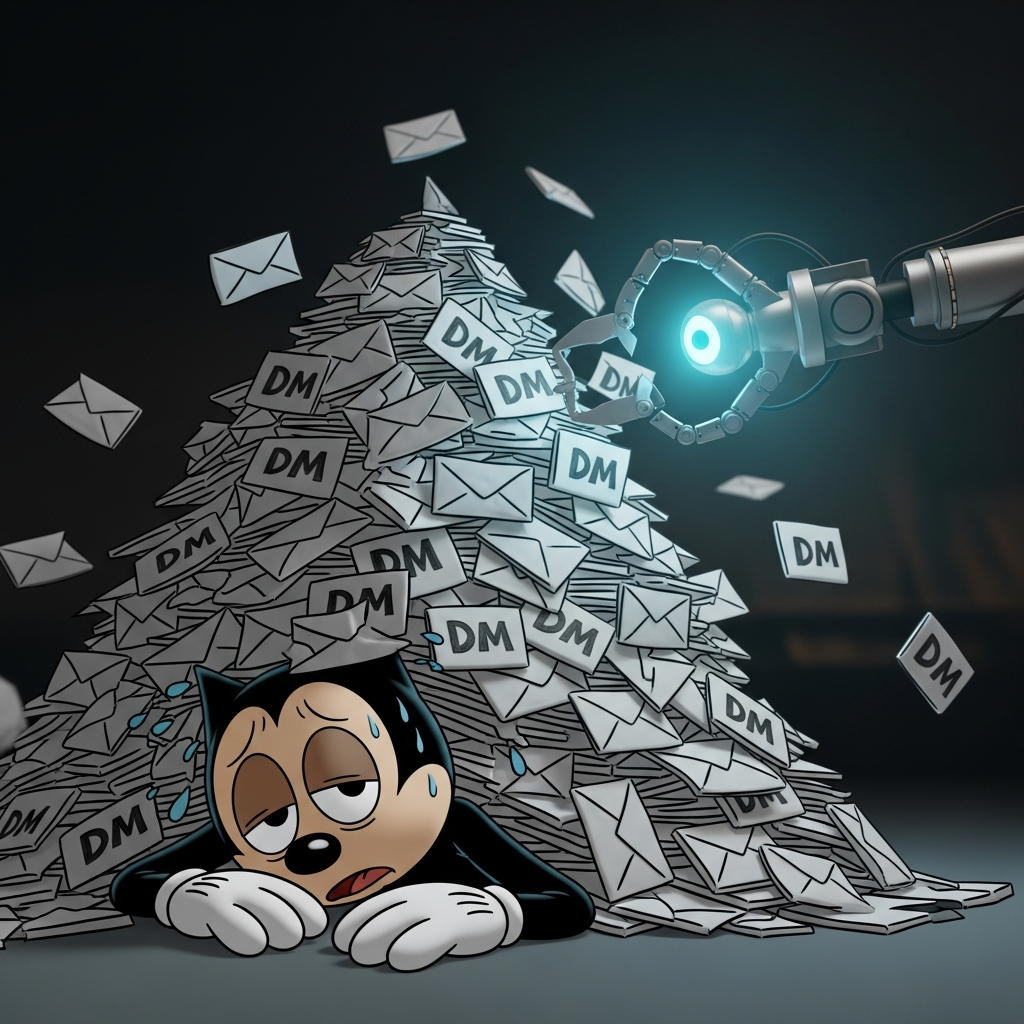
If you are still sitting on your phone at 11 PM replying to "Thanks for the follow" DMs or answering the same three questions in your comments, you aren't an entrepreneur. You are a highly-paid secretary for a multi-billion dollar social media platform.
You are trading your most valuable asset—your focus—for "engagement" that has the shelf life of a banana.
The AI social engagement model is different. I built these tools because I realized that every minute I spent typing "You're welcome!" was a minute I wasn't building my empire. I needed a system that researched the user, understood their intent, and replied before they even put their phone back in their pocket.
The Challenge With Manual DM Engagement
Social media direct messages have become critical to customer engagement. However, manual responses are time-intensive—studies show brands take 24-48 hours to respond to DMs, losing customer momentum. Research agents solve this by understanding context and crafting personalized responses at scale.
Without automation, you're limited to:
- Responding to a handful of DMs per day
- Missing engagement opportunities during off-hours
- Inconsistent response quality based on agent mood/workload
- Inability to track engagement patterns across hundreds of conversations
AI-powered research agents enable 24/7 customer engagement with consistent quality, turning your DM channel from a customer service burden into a growth engine.
The "Speed to Lead" Arbitrage
In the world of online attention, interest decays exponentially. When someone follows you or comments on your post, they are at a Dopamine Peak. They are curious. They are primed.
If you reply in 3 seconds, you capture that peak. If you reply in 3 hours, you’re just another notification they’ll swipe away.
By leveraging our Automated Research Engine, we don't just send a generic "Thanks!" We scan the user’s context, identify their needs, and deliver a tailored resource instantly.
Automating "Thank You" (The 28-Touch Entry Point)
As we’ve discussed before, your first interaction is the most critical. When someone follows, the system triggers an immediate, helpful DM. It isn't a sales pitch. It’s a "Handshake."
"Hey, saw you're interested in AI Automation! I just ran a deep-research report on that—here’s the summary. Hope it helps!"
This isn't a bot. It’s an Autonomous Agent using the same code architecture we use for deep-topic analysis. It’s helpful, it’s instant, and it moves them 5 steps closer to your newsletter without you lifting a finger.
From Nothing to Infrastructure
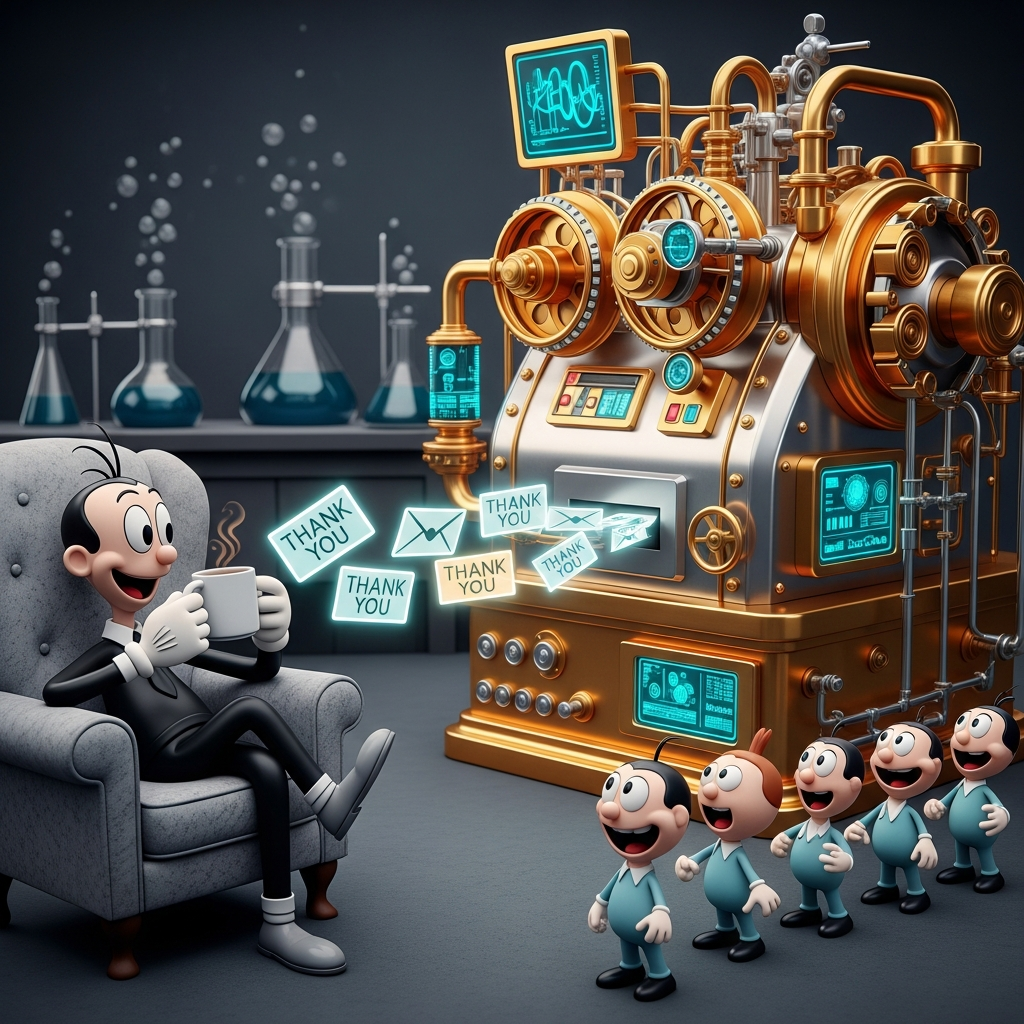
Remember: I am not a coder. I didn't build these systems because I loved Python. I built them because I hated the manual grind.
I am the proof that you can move from "How do I prompt this?" to owning a fully automated DM and Research factory. You don't need to spend $20k on a dev team to stop being a slave to your notifications. You just need the right architecture.
The Builders Lab Pro: Inherit the Engine
This is exactly what we do inside the Builders Lab Pro. We don't just give you "prompts." We give you the 8-app suite and the research frameworks that automate your growth.
We show you how to: * Integrate Research Agents: That scan and summarize data for your followers in real-time. * Deploy DM Automators: That handle the "Thank You" and "Resource Delivery" loops 24/7. * Own Your Attention: Moving followers from the platform (where you rent) to your CRM (where you own).
Conclusion: Own Your Time
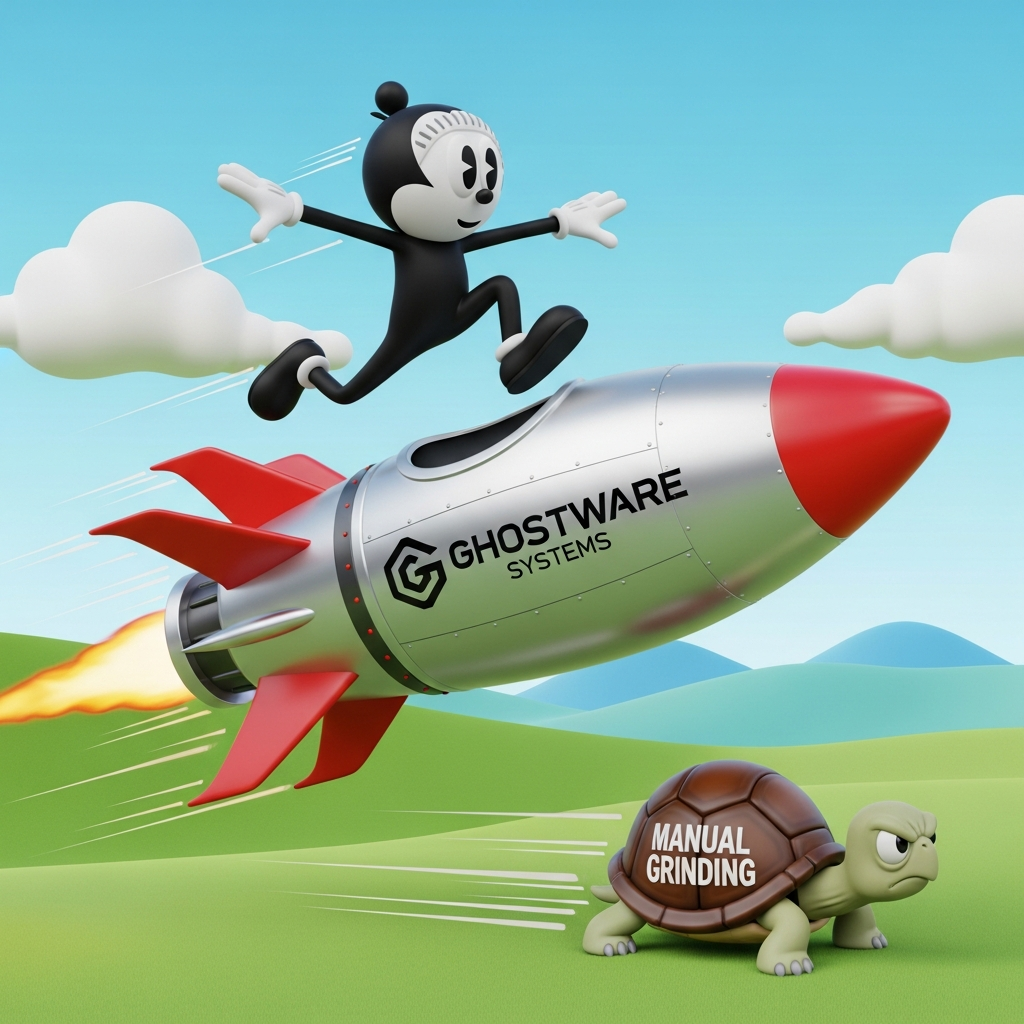
The "Manual Grind" is a badge of honor for people who don't value their time. For the rest of us, there is automation.
Stop replying. Start building. The Ghostware way has already paved the road. All you have to do is drive.
Frequently Asked Questions (FAQ)
What is a Research Agent?
A Research Agent is an AI workflow (often built in Abacus AI or LangChain) that takes a user's query or profile, scans the web for relevant context, and generates a personalized summary or response.
How is this different from ManyChat?
ManyChat handles the delivery of the message (the plumbing). The Research Agent handles the content of the message (the brain). You connect them using tools like Make.com.
Can I use this for LinkedIn?
Yes, tools like Expandi or Salesflow allow for similar automated sequences on LinkedIn, though the "Research Agent" capability requires a bit more custom setup using webhooks.
The Research Agent Workflow: A 5-Step System
Research agents follow a predictable, repeatable workflow that dramatically improves response quality and speed:
1. Capture - Monitor and Extract
The system monitors incoming DMs and extracts key information: sender profile, message content, and conversation history. This creates a foundation of data for the research phase.
2. Research - Query Your Knowledge Base
The agent queries your knowledge base, product documentation, and previous conversations to understand context. It doesn't respond in a vacuum—it has access to your business's institutional knowledge.
3. Personalize - Craft Tailored Responses
Using this research, the agent crafts a response specifically tailored to that person's interests and history. This isn't a template response; it's personalized to their unique situation.
4. Respond - Send with Appropriate Tone
The message is sent with the appropriate tone and call-to-action for your brand. The system learns your voice and applies it consistently.
5. Learn - Log Interactions for Improvement
Each interaction is logged, creating a feedback loop. The agent improves over time as it learns from successful interactions and customer feedback.
Real-World Example: How It Works in Action
Imagine Sarah DMs: "How does your product handle large datasets?"
Here's what the research agent does in milliseconds:
- Recalls that Sarah viewed your pricing page 3 times last week
- Pulls your technical documentation on data handling capabilities
- Crafts a response addressing her likely use case (enterprise-scale data processing)
- Includes a relevant case study or feature demo link
- Sends a personalized response in seconds, not days
This automation reduces response time from 24+ hours to seconds while improving relevance and conversion rates. Sarah feels heard, understood, and valued—exactly the experience that builds customer loyalty.
SPECIAL OFFER: THE FOUNDERS INTAKE
Ready to stop being a secretary for Instagram and start being a System Owner?
Join the Builders Lab for just $49.99/month.
The Fast-Action Bonus: The first 10 people to join will get a 1-1, 45-minute Strategic Planning or Debug Session with me. I will personally look at your "Research to DM" workflow and show you how to automate the next 10,000 interactions.
Frequently Asked Questions About Research Agent DM Automation
What's the difference between research agents and simple chatbots?
Chatbots follow rigid scripts ("If customer asks X, reply with Y"). Research agents are context-aware AI systems that understand your business, your customer history, and current product details. They read full conversations, analyze customer intent, and craft responses unique to each person. Unlike chatbots, they improve over time as they learn from successful interactions.
The key difference: Chatbots execute pre-written rules. Research agents use reasoning and context to generate novel, relevant responses for each situation.
Can I customize the responses for my brand voice?
Absolutely. Research agents learn your brand's tone, vocabulary, and values from existing communications. You can set guidelines like "tone: professional but friendly" and "always include product demo link in technology questions." The agent then applies these rules consistently across all DMs.
Over time, as the agent processes more of your communications, it becomes better at matching your exact voice and style—sometimes to the point where customers can't tell if they're talking to AI or a human team member.
How do I ensure agents don't send inappropriate or hallucinated messages?
Research agents operate within guardrails you define. They can only reference:
- Your approved knowledge base
- Previous customer conversations
- Your documented product information
They cannot generate false claims or make up features. All responses can be reviewed before sending, and you can set thresholds (e.g., "hold for approval if confidence is below 85%"). This human-in-the-loop approach ensures accuracy while maintaining speed.